
 Türkçe
 English
 Deutsch

Botox
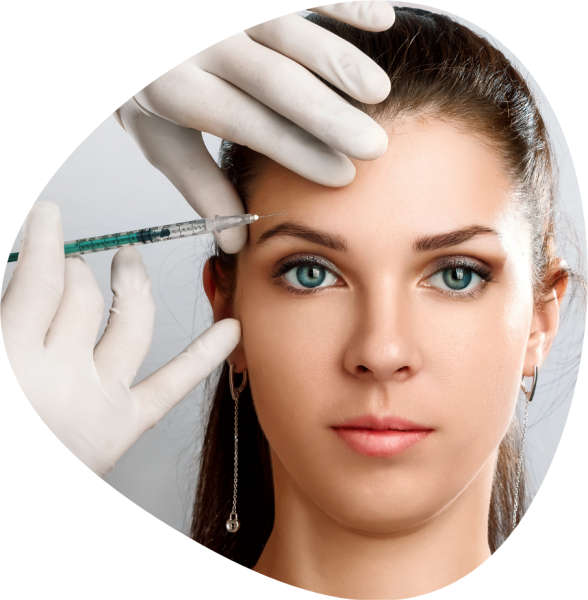
The botox is a toxin obtained from the bacterium named Clostridium Botulinum, the use of which has increased rapidly in the recent years for the aesthetic purposes. To put it simply, its function is to paralyze the muscles in the area where it is applied. In this way, it was first used in the treatment of strabismus. Afterwards, it was applied for swallowing difficulties and spastic diseases. With the beginning of the application for the aesthetic purposes, it broke new ground in the field of the non-surgical aesthetics. The botox is the trade name of the drug originally produced by the Allergan® company. There are also forms that were later released by the other companies with the names such as Dysport and Neurobloc.
How does botox affect?
The botox creates temporary paralysis in the muscles around the area where it is applied. The wrinkles and lines formed due to the constant facial expressions and involuntary muscle contractions disappear due to the inability of the muscles that cause it to work.
How long does the effect of botox last?
Although the effect of the botox varies from person to person, it lasts between 3-6 months. The effect starts in 3-4 days after the application and reaches to the peak in the 2nd week. In the 3rd month, the mild contractions begin in the paralyzed area and the effect disappears between 4-6 months. It is recommended to be repeated between 4-6 months. As the number of the applications increases, there is no difference between the results of the applications, but fewer doses begin to produce the same effect.
Where is the botox applied to?
The most prominent effects of the botox on the face are in the upper face area. The wrinkles in the corners of the eyes (crow's feet), the root of the nose, and the forehead area are the main target. It can be used in the rabbit lines caused by laughing in the nose, lifting the corners of the lips upwards and lifting the nasal tip droops caused by the increase in the muscle function.
Does botox treat every wrinkle?
The botox only reduces the wrinkles caused by muscle contractions and facial expressions. It is not effective on the lines formed due to the aging and loss of the subcutaneous tissue. It should be used together with filling applications in the patients having such lines.
Can botox be used in the treatment of sweating?
Since the botox forms a paralyzing effect on the sweat glands, it can also be applied on the armpits, palms and soles of the feet. It is applied to the larger areas in more dilute doses. It is the most commonly used method in the treatment of excessive sweating.
Is Migraine treated with the botox?
After the migraine patients who had Botox for the aesthetic purposes, especially on the forehead, reported that their headaches also disappeared, the frequency of the migraine attacks began to be reduced by applying the botox to some trigger points.
How long does the botox application take and how is it done?
The botox is a procedure that can be done in a short time in the outpatient conditions. The local anesthetic creams are applied 10-20 minutes before and the discomfort of the application is reduced. The procedure is performed by applying to the various points with very fine needles. Since there can be bruising due to the minor bleeding after the application, ice application can be recommended before and after the application. The patient is asked not to lie down for 2-3 hours after the application, not to make facial expressions and not to be in very hot environments such as baths and saunas for the first 3 days.
Does the botox make the face expressionless?
The purpose in the botox is not to make the face expressionless, but to reduce and eliminate the wrinkles in unwanted areas when the facial expressions appear.
Is my face got more wrinkled than the normal when the botox application is stopped?
This is not the case because the botox prevents the formation of new wrinkles.
Güncelleme Tarihi 19.05.2022